The Just Man
Rev. Michael J.V. Clark • December 21, 2025
If you haven’t ever read Pope Benedict XVI’s addendum to his seminal work, Jesus of Nazareth, called The Infancy Narratives - go out and buy it now. It could even be under your tree by Wednesday night. Beautifully translated from the original German by my own seminary rector no less, it is both scholarly and pastoral, overlaid with a childlike affection for the simplicity of Christmas, and deep wonder at the Christkind lying in the manger.
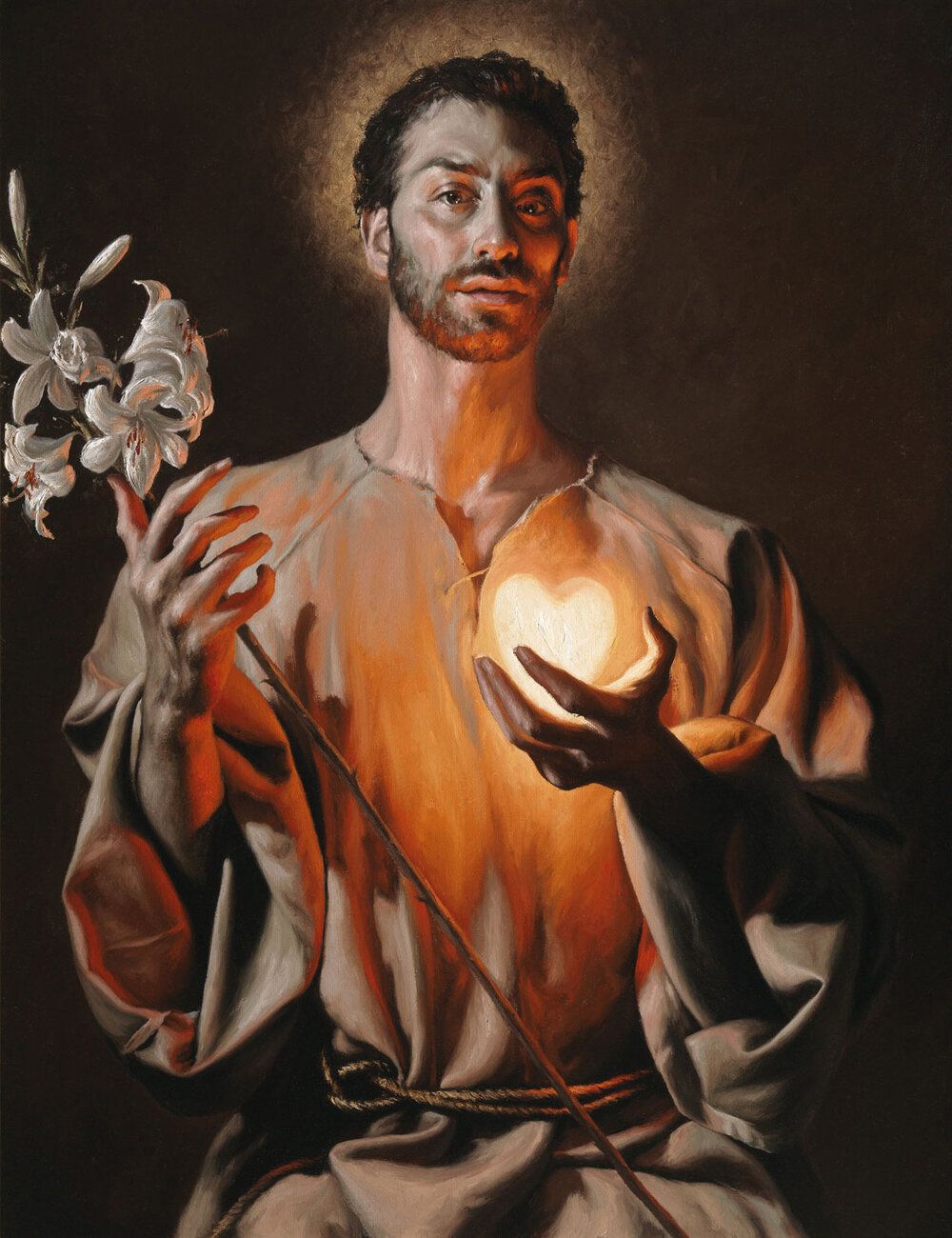
This Gospel, located after Matthew’s careful recitation of the Lord’s genealogy, tells the story of the birth of Christ from Joseph’s point of view. But here’s the first observation: you must remember it is told with hindsight. We know how the story ends, but we must enter into the narrative from the perspective of the righteous man, Joseph, who did not.
It is interesting to consider two things about this passage. First of all, for us to know anything about the facts recounted, it is Joseph himself who must have told somebody. We are given a glimpse into the very soul of this great saint - how God speaks to him, and how he responds to God. It is a deep privilege - and a point of sober reflection from the outset - do we respond to God in this way? Does God speak to us in this way? If not - we must ask ourselves - why not?
Secondly, an even more remarkable fact emerges, and I will make it boldly. There is a clear mirror image to the more famous Annunciation to Our Lady in Luke’s Gospel. This is deliberate - the narratives form a kind of diptych, where each complements the other from both parents’ points of view. But the information given to Joseph is arguably a more explicit reference to Christ’s divinity than what Gabriel said to Our Lady: i.e. that Our Lord is not simply blessed by God, and holy, but that he is in fact God incarnate. This means that a case can be made for saying that Joseph was the first human ever to receive the explicit confirmation that Jesus Christ is God.
To understand that, you need a bit more background to the names involved. A key assumption of the Gospel writer is a Hebrew audience, one that knows who the Old Testament prototypes who previously bore those names. The famous Joseph of the Old Testament is of course the second to youngest son of Jacob and Rachel, favored by his father by a distinguished coat of many colors, much to the envy of his brothers, who first seek to kill him, and then sell him into slavery in Egypt. Joseph is also notable because God speaks to him in dreams - and his ability to interpret dreams is what really fires his siblings’ rage.
The attributes of the Old-Testament Joseph thus informs our expectations of Mary’s husband. The overlays of Egypt are obvious - and when the time comes, this Joseph will flee with Mary and Jesus to the safety of exile in a foreign land, but it is no coincidence also that the (unnamed) Angel of the Lord speaks to his namesake in dreams, and he has the charism to interpret those dreams accurately.
The Angel also tells Joseph what the child of the Holy Ghost’s name should be: Jesus - although, remember, “Jesus” is the Lord’s name in Latin. His name in Hebrew (or Aramaic) is ‘Yeshua’ - or Joshua. Matthew makes the point crystal clear: you shall call him Jesus because he will save his people from their sins. But wait. Why is that so obvious? What’s the reason for the ‘because’? Why is ‘Joshua’ such a self-evidently appropriate name?
Well, the Old-Testament Joshua was the chosen successor of Moses, the one who ultimately defeated the Canaanites and brought Israel into the Promised Land, but the reason the name is perfect for the Lord is the key to the whole passage: the name (as I have mentioned a few times before) itself means ‘God saves’ - the Angel then says to Joseph: You shall call him ‘God saves’ because he will save his people from their sins.
They are his people, he will save them, and only God can save people from sin. This is more than an implication - it is an explicit message for Joseph that the child is not only holy, but has the power to save his people from their sins: in no uncertain words: this child is God himself.
Everything that Gabriel says to Our Lady is consonant with this. Gabriel tells her that the child to be born of the Holy Ghost is (a.) great, (b.) Son of the Most High, (c.) heir to the throne of David, (d.) holy, and (e.) Son of God. In that order. Of these, Son of the Most High, holy and Son of God are clearly direct messages of Christ’s divinity given to Mary. However, whilst we know that to be the case, because of subsequent events, the titles themselves are not as explicit as the information given to Joseph. Son of the Most High is a quotation of Psalm 82:6: I have said you are gods, and you are all sons of the Most High, and the line of Davidic kings are described as sons of God, in the sense of adoption.
The difference with the message to Joseph is the explicit prophecy revealed to him that Jesus will save his people from their sins. It’s extraordinary! Joseph is given insight into what it means for the Virgin to conceive, according to Isaiah, what it means for God to be Emmanuel - with us. God is with us because he will save us from our sins. Just as the Old-Testament Joshua went into battle and led us to the Promised Land, so this child, to be born of Mary, will do battle with sin, and death, and lead us over the Jordan into Eternal Life.
Remarkable, then, that Joseph’s reported speech is not part of the biblical canon. We know what God told him, we know his reasoning, and we know his actions, but we do not know his words. In that there is a lesson for all of us, and it is linked to the most important title he has: Joseph is a just man (or, a righteous man.) But being just does not mean you have to be right all the time. Joseph’s conclusion at finding the news that Mary is with child is more than just, it is supernaturally good. He had every right to divorce her with much fanfare, and preserve his own reputation. He chose to divorce her quietly, and take on her (supposed) guilt and shame himself. That’s why divorcing her quietly meant - everyone would conclude that the fault was with him, not her.
But this supernaturally good decision was not correct - not for any deficit on Joseph’s part, but because God had not yet revealed to him the essential component: the child was of the Holy Ghost, and thus Mary was sinless. It is because Joseph is upright, honest, and just that he prays. He involves God in all his decision-making, and thus he has created space for God to speak to him in his dreams. If you want to be sure that you also do the will of God, you must be like him - you must create that space in the silence of your heart. Refrain from broadcasting what you think is the right answer, but instead, tell it to God in the quiet of your conscience, and the Lord, who speaks immediately to the just and upright of heart will respond. Let it be said of you, as of him: he did as the Angel of the Lord commanded him.
Recent Posts