Dig for Victory?
Rev. Michael J.V. Clark • July 12, 2026

I'm trying the 'no-dig' method in the garden right now. The theory is simple: don't keep disturbing the soil. Feed it from above, let the worms and microbial life do their work, and resulting healthy soil will produce vigorous plants. It remains to be seen whether it’s a sufficiently Biblical method, but today's Gospel reminds us that Our Lord was certainly interested in the conditions of the soil.
First we meet the path - here the soil has been trampled by human or animal traffic. I don’t think we’re talking Connecticut Bluestone here. Instead, the crumbly earth has been compacted so that there’s no room for the seed to germinate, and the soil has no capacity for light, air, or moisture. It resists new life by its unyielding texture, leaving the seeds vulnerable to being picked off by the birds.
Secondly we meet the rocky ground - here there is open soil, and capacity for some light and air, but there are two major problems: first, the rocks, do not permit space for growth in exactly the same way as the compacted path; but secondly their presence means the soil has reduced capacity for water, meaning a seed that germinates quickly withers, because it cannot be sustained.
Thirdly the thorny ground. Let’s look at this more deeply. Thorns are not a different kind of thing from the plant that the seed will produce. Thorns are plants too, and they come from seeds, just like all vegetal life. But they jostle for space and resources with the seed the Sower wishes to have grow in the soil, and because of their inherent qualities of vigor and hardiness, they choke the delicate seed and cause it to fail. In Greenwich the thorns are rarely obvious sins. More often they are perfectly respectable things: careers, investments, children's schedules, college admissions, athletics, houses, vacations. None of these is evil. Indeed, many are good. But if they occupy the best soil of the heart, they become thorns.
Finally, the rich soil. The jury’s out on whether this is a ‘no dig’ lasagna sheet of cardboard and compost - but what we do know is that this has optimal conditions for the seed once sown to germinate; there are no inherent obstacles in the structure of the soil, like the path or the rocky ground, and there are no competing plants as with the thorns. But note two things that are very important:
First of all, from the previous examples we can be sure that the seed of the Word takes longer to germinate and grow than the seeds of worldly anxiety or lure of riches. How often this is the case with prize seeds - gardeners know very well things of little value grow quickly and easily, but things of great value take time to establish themselves, and put down strong roots before top growth.
Secondly, note the the aim of this growth is to produce fruit. Stems, leaves and flowers are secondary to the aim of the sower, which is to reap a harvest. Therefore, the Word sown in us is supposed to bear fruit, and as we know, fruit contains seed that is of the same species as the plant which bore it.
So, Our Lord tells us about seed and soil, but every gardener knows there are other necessary conditions for growth. We know from biology that even a good seed sown in soil will not grow without adequate moisture, air, and light. Whilst they are not part of the Parable itself, what might these represent?
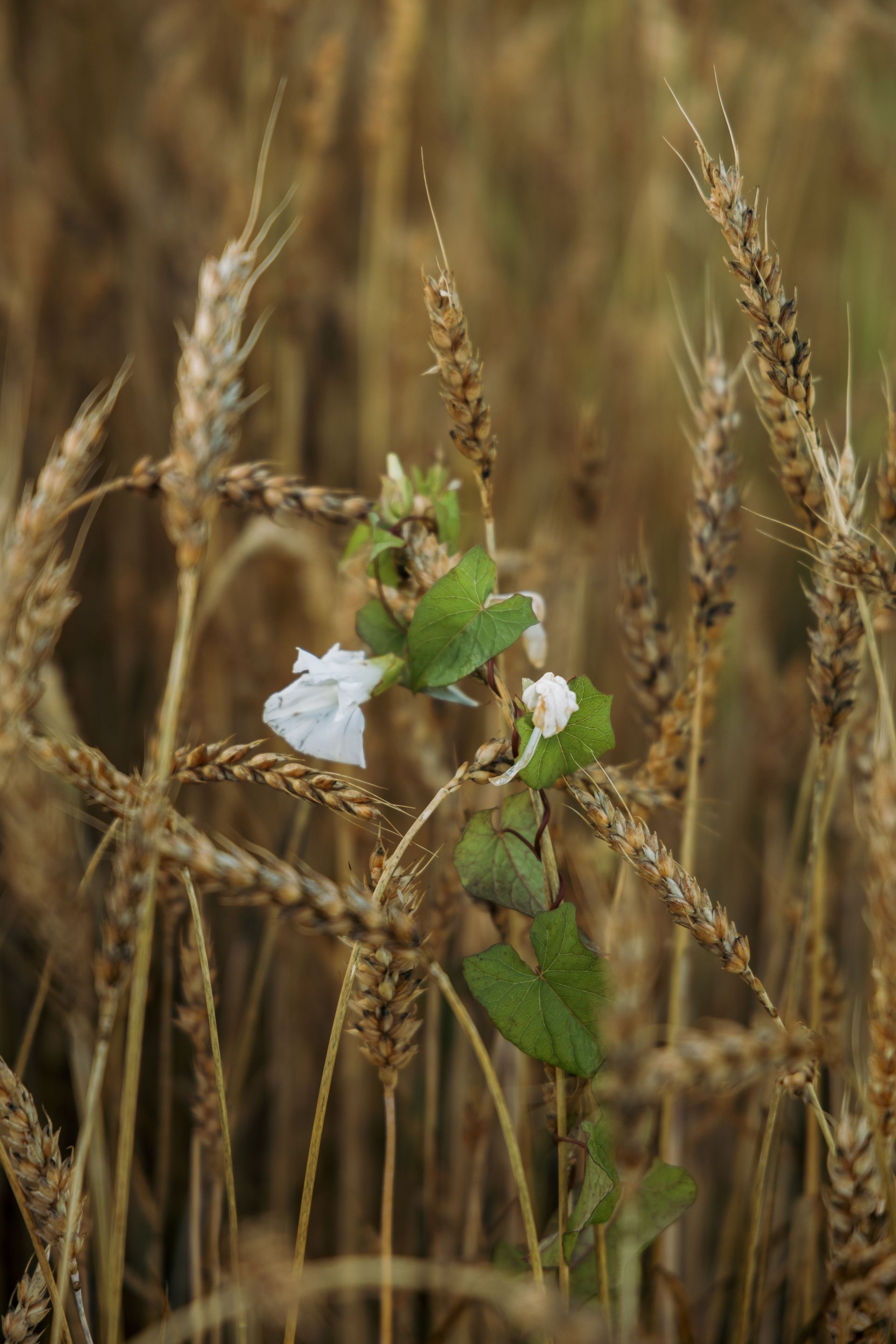
Well, I think the moisture is straightforward. Water is grace, which appropriately enough for our image comes from the heavens and is poured out on the earth without exception: the path, the rocky soil, the thorns and the rich ground all receive this outpouring of God’s goodness. The difference between the soils is their capacity to receive it - what makes a path hard is its resistance to moisture, what makes a soil rocky is its lack of capacity to retain it, what makes the thorns thrive is their ability to divert God’s goodness for their own ends, whereas what allows us to describe soil as ‘rich’ is in direct proportion to its ability to manage the reception of moisture.
So too with grace. Over time the soil of our hearts can become compacted and resistant to God’s grace, so that it flows over and around us, without penetrating the soul, or perhaps part of our soul is rocky soil, with boulders of resistance and dusty silt that has no capacity to retain grace. The seed of the Word is perfectly sufficient in itself, but the Sower is not content just to produce seeds, he wants fruit.
Air represents something intrinsic to the structure of the soil that permits receptiveness to grace; something within us, and shared naturally by all of us, if our soil is in good condition, but also something that can be damaged, as in the examples of the path or the stony ground. I think a good candidate for this must be reason. To respond to grace requires us to think, logically, rather than simply dart about, reacting to our emotions. When the Sower sows the seed of the Word in our heart, if we act irrationally, it would have no space to put out its roots and tendrils into our nature.
Finally, what about the light? Anyone who has started their dahlias in the basement will know a seed can germinate in the darkness, but quickly degenerates without light. What could the light be? Well, think of the structure of any plant. They are, if you like, natural solar panels, oriented to the light. They produce energy from the light itself, and the leaves are designed to receive it and the plants flourish because of it. For the soul, the light must be God’s glory: his very presence is magnificent, and the seed of the Word exists to reflect his glory. In all eternity we need not lamplight, nor sunlight, because God himself shines on us. If we allow the seed of the Word to grow in our soul, we become a fruitful plant, whose very existence tells of the glory of God.
I've no idea whether the 'no-dig' gardeners are right. I’ll let you know another time. But I do know this: the Sower is still sowing. The question today is whether our hearts are becoming the kind of soil that will bear fruit. And perhaps that's the question each of us should take away today: what, in my own life, is the fruit the Sower has been trying to grow?
Recent Posts