Now I See

Rev. Michael J.V. Clark • March 16, 2026

Do you remember I said a few weeks back together we are going to look again at the Faith we think we know? It’s important we take on board this attitude as a normal way of keeping our Faith alive. It’s not saying we have got it all wrong, but it is saying that God does not want us to get to a certain point and stop. He wants us to continue growing in Faith every day of our lives until that day he calls us to himself. That growth is truly the meaning of life. 


Some of you might be gardeners - ‘green-thumbed’ in American parlance, ‘green-fingered’ in mine. If you work the land you know that for the yard to stay the same requires constant change. If you leave it alone, in just a matter of weeks the weeds will begin to spring up, then the vines will invade the beds, the crabgrass will take over the lawn, and the briars will choke the shrubs. 


Good gardening is about constant adjustment, feeding the soil, giving the plants light, moisture, and air, and being on the lookout for anything which upsets the delicate balance that order requires. It’s exactly the same with the spiritual life. If you conclude: ‘well, I went to CCD until 8th Grade’, or (my favorite) ‘I went to Catholic school’ but you haven’t re-examined the fundamentals of who Jesus is, who you are, and why it all matters, then maybe now is the time to get the pruning shears out.


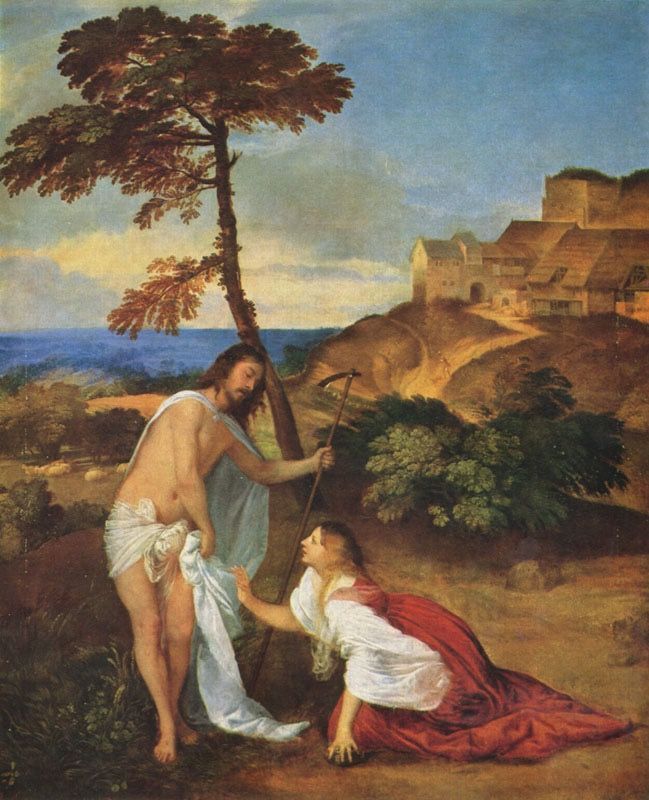
So, our Gospel of the Man Born Blind this week invites one of those big questions. I’ll pose it to you: what are the stories of Jesus’s miracles for? Why does the Bible include them? What do they reveal to us of God’s plan of salvation? It’s possible to receive this story (and all the other miracles) as an example of how extraordinarily nice Jesus is - how compassionate in comparison with the mean and nasty pharisees who criticize him for healing on the Sabbath, or an example how powerful he is - he must be God because he can do these supernatural things. After all: 


Never since the world began has it been heard that anyone opened the eyes of a man born blind


Those first two observations are not wrong. Jesus is extraordinarily nice, and powerful too. But we must be careful not to stop at this point.


You see, Jesus healed many other people - thousands, probably - and those healings, and the events surrounding them are not recorded. Is that a problem? No. Would we like to hear more about what Jesus did? Perhaps. But the Gospels are not chronicles of Jesus’s actions. They are not a biography. They are a curated collection of sayings, teachings, and actions, presented with necessary context, so that, when made present in the Liturgy, the believer would develop an accurate picture of who Jesus is over a lifetime of repetition.


Most of that happens supernaturally: it’s not because you hear the words in your own language that you come to an accurate picture of who Jesus is - it’s because He himself is objectively made present in the Liturgy for us to discover him. When we proclaim his mission in the Gospels, it is He himself who is acting. Don’t believe me? Well think back to the days before the printing press. How would anyone have known what the Bible said? They could not read, but they did have Faith. If they didn’t - you and I would not be here. Their Faith did not depend upon understanding the words proclaimed in the Liturgy. It depended upon encountering the Author of Salvation Himself, and having that encounter explained to them.


The story of the Man born Blind is not chosen for today’s Gospel by accident. It is associated with the Scrutinies of Catechumens preparing for Baptism at Easter - and the whole Gospel is really a theological exposition of the Sacrament of Baptism. The Blind Man has a disability from birth, which he is not able to solve by his own efforts. He requires intervention and healing. Meeting Jesus, he undergoes two ritual actions - anointing, with mud and spittle, and washing - in the Pool of Siloam. Catechumens would immediately think of the pre-baptismal anointing with oil (that used to be an anointing of the whole body in earlier Christian practice) and the immersion in the font of Baptism at the hands of the priest (again, that used to be a full immersion of the whole body under the water.) 


But the focus on blindness is because Baptism was also called ‘Illumination’ in many early sources, because through it the eyes of the soul are opened to sanctifying grace. This Gospel then, explains the Christian understanding of how grace makes us righteous by Christ’s merit converting the heart and renewing us interiorly, and contrasts it with the Pharisees’ understanding of righteousness by human merit in the external observance of the Law, regardless of what’s going on in the heart.


So the Gospel is proclaimed in the Liturgy, but it also needs to be explained. In the Liturgy, Christ himself acts; in catechesis we learn to recognize his action. We need both - the Gospels do indeed record the amazing charity and power the Lord has to inspire us, but in choosing these stories to recall, liturgical catechesis allows us to understand how God has worked in our lives. This Gospel is much more than information about a miracle that occurred to an anonymous man long ago. It’s about us. The man born blind is you and me, unable to see without God’s touch in the anointing and washing in the font of Baptism. 


But once our eyes are opened, there’s still work for us to do - notice under interrogation he who was born blind moves from describing Jesus as ‘the man’ to ‘a prophet’ then, finally, ‘Lord.’ The identity of Jesus still needs to be received, even if the eyes of Faith are opened. Thus we recognize our own journey in the story - our need for enlightenment, and a commitment to ongoing spiritual growth, lest we become like the Pharisees who remain in their sins because of their refusal to accept their need for grace.


We must instead ask ourselves honestly: Where am I still blind? Do I trust in my own righteousness because I grew up Catholic, or because of my external compliance with the precepts of the Church? Or instead, am I truly open to the continual pruning that a life of grace entails? Perhaps we could even say, a life of amazing grace:


I once was lost, but now am found; was blind, but now I see.


Recent Posts

By Rev. Michael J.V. Clark March 22, 2026
ܗܳܕ݂ܶܐ ܗܘܰܝܬ݁ܽܘܢ ܥܳܒ݂ܕ݁ܺܝܢ ܠܕ݂ܽܘܟ݂ܪܳܢܝ [Hade hawytun ‘abdin l’dukrani] When Christ says ‘do this in memory of me’ (and, assuming he spoke in Aramaic, the passage above is what it sounded like) he does something rather curious. He does not specify how often this dukrana (active memorial; in Greek, anámnesis ) should be - and this was perhaps one of the first things the early Church had to come to a consensus about. Should it be once a year, like the Passover? Or should it be once a week, because the Resurrection happened on the first day of the week? Well, in classic Catholic fashion, the answer is ‘both’ - we celebrate the Lord’s Day - Dies Domini - every week on the day of the Sun, but we also celebrate the dukrana of the Lord’s Paschal Mystery in a special way once a year. And today, we’ve arrived at the gates. We call the special celebration of the Paschal Mystery Passiontide because it focuses to the exclusion of all else on the events of Calvary. But there’s something you really need to understand at this point. If it’s the first time anyone has ever told you, I apologize - but in the Sacred Liturgy, our remembrance, or memorial of the Lord’s Passion is not simply calling those historical events to mind. It’s not re-enactment either, in the sense of a play or pageant. Instead, liturgical remembrance (which is what we do every Sunday - indeed every time we celebrate the Eucharist) is a participation in those events that happened in history, as if we were there - and not just as spectators either, as if we were Christ. This is what the Liturgy is. Gathered together, we are Christ’s body, and collectively we undergo what happened to Christ’s body, together. As St. Paul puts it: The blessing cup that we bless is it not a communion with the blood of Christ? St. Paul isn’t making the rather obvious point that there’s some kind of link between what we do, and what Christ did the night before he died. He’s saying something else - when we bless the blessing cup, we are in communion with the blood of Christ - that is, just as Christ’s blood was poured out on the Cross, in the Sacred Liturgy Christ’s blood (the exact same substance) is also poured out for the remission of sins. Dukrana is the way God remembers. When we ask him to remember his covenant, it’s dukrana . It’s not because the idea goes out of God’s mind - he never forgets - but when he remembers, the covenant is actualized in the here and now. In the Liturgy God teaches us his way of remembering - he teaches us dukrana - dissolving the barriers of time and place, in order to allow us to be crucified with Christ, and rise with Him, too. I’m telling you all this because we have clearly changed gears liturgically this week. The veils on the crosses and images are a signal to you. They insist that you focus on the liturgical rites, and not on any devotions, or imaginations of your own, except the Stations of the Cross. It’s by no means that devotions are wrong, it’s just that now the Church requires your full, conscious, and active participation in the Mysteries. The statues are veiled because for two weeks we come out of the world - what the world is doing right now doesn’t matter, it has dissolved away, it is irrelevant; what matters now is the Passion of Christ, and our taking part in it. We are two weeks out, and the Church has a preference that we call to mind the resurrection of Lazarus. It’s the Gospel for Year A, but also permissible in the other years as well, because it locates the liturgical action in realtime historical sequence. You see, the events of next week, Holy Week, are historical facts. We know when Passover was celebrated, because it relates to the phase of the Moon; and we know that Jesus was crucified before Passover - indeed, in something of a hurry, so the bodies would not remain on the crosses during the holy day. We know too, because John tells us that Jesus entered Jerusalem to jubilant crowds waving palms six days before the Passover, and we also know that the crowds had very recently been stirred up because many had witnessed the resurrection of Lazarus. The raising of Lazarus was a crisis in Israel. A full-on crisis. Many people - many Jews - came to believe in Jesus because of the power of this sign. They saw a stinking corpse rise out of the tomb, still wrapped in the ceremonial grave clothes. Can you imagine the scene? It would have been terrifying - not least for Lazarus himself, who woke up after four days swaddled in bands. This was no peaceful party trick, it would have been dramatic - and noisy. Can you picture Lazarus’s panic? He wakes up, but he can’t see, or breathe, properly because of the tight cloths: “unbind him” the Lord commands, “and let him go.” It’s the same command the Lord gives when you and I were baptized. And I suppose that’s the point. To place ourselves outside the stinking tomb, to witness a corpse come to life is designed to wake us up! But why did it upset the Jewish elite so much? Well, remember that Roman rule over the Jews was a really rather manipulative play off between three power bases: the Prefect (Pontius Pilate) the Herodian puppet kings (like Herod Antipas), and the religious authorities, most chiefly the Sanhedrin. When the Pharisees heard about the raising of Lazarus, and the conversions of the people, they realized the threat to the delicate balance of power such an uprising would represent, and so they ask the High Priest, Caiphas, to convoke the Sanhedrin - a Greek word a bit like ‘Synod’ that means seated assembly. In Jesus, the Sanhedrin finds a rare point of unity. Remember, of the 71 members, the majority were conservative Priests or Elders, who quarreled (sometimes violently) with the upstart, but populist, Pharisees, about key points of doctrine. But they found unity in their rejection of Jesus, a man whose face just didn’t fit the image of a Messiah they were looking for. And so Caiphas utters the prophetic line: “it is better…that one man should die for the people, not that the whole nation should perish.” These words uttered, it was only a matter of time before the plot to kill Jesus (and Lazarus) would unfold. Out of grief, then, we recognize that the Lord has been condemned. Despite the palms and the acclamations of next week, from now on, he is a dead man walking. But you and I are here because we know how the story ends…
By Rev. Michael J.V. Clark March 8, 2026
Almost every commentary dealing with John 4 draws an inference from the dialogue about the morals of the woman Jesus meets at the well. They observe that the Lord makes a leading request: “Go, call your husband and come here” - knowing that she has had five husbands, and apparently she is now cohabitating with a man who is not her husband. They then note John’s comment about it being the sixth hour - Noon - with a cultural observation, which goes something along the lines of: ‘nice girls don’t go to the well at Noon’. It’s tempting to do this. But whilst the Bible does provide us with information about the woman’s marital status, we are, in fact, not privy to the reasons why she had five husbands. Could it be that she had been divorced, or set aside, five times? Yes, it could be. Why might that be? Well it certainly wouldn’t be because she was cavorting with another, because if that were the case, she would be dead. Remember, she herself had no power to divorce any of her husbands, but each one of them had the power to put her away. But there could also be a quite different explanation. Samaritans, like Jews, considered themselves bound by Deuteronomy 25 which commands a brother to marry his brother’s widow if he predeceases her; a ‘levirate’ marriage, although the Samaritan gloss was that it was only possible if the prior marriage was unconsummated. The picture is much more complicated - and what emerges is that we rush to conclusions about her morality. We assume that she was to blame, when the reality is - we don’t know. Similarly, with coming out to the well at Noon. It is, of course, a practical observation that the onerous work of drawing water is customarily done in the early morning or later evening, when it is cooler, and that during the hottest part of the day people would not, typically, be going to the well. So John invites us to ask why she might be going there at that time. But it is not true that no-one would ever go to the well at Noon; the text also tells us that the disciples were not with Jesus because they had gone to get food. Sychar is clearly a town that does not fully shut down at Noon. Contrast that with towns even today in the South of Italy: try getting food during siesta time there - the shutters come down - and nothing is open. So at the very same time as noting the unusual timing of her visit to the well, Scripture also cautions us about rushing to conclusions about that fact. But, even if she were coming to the well at Noon to avoid her fellow townspeople - why must we rush to assume she is in the wrong? Maybe they are in the wrong - maybe she is innocent - simply the complicated circumstances of her domestic life have left her on the outside, a pariah, because of the prejudice of others. We have all been there. Furthermore, if we assume her reputation is trash, it doesn’t really make sense of the latter part of the store, where she runs into the town and evangelizes the whole place in a matter of hours. If she were the scarlet woman, it’s not so likely this would be possible. So again, the Biblical data tells a more nuanced story than our own prejudices would urge us to conclude. It is essential we are on the guard for this kind of reading-in to the Scriptures of our own baggage and justments, lest we fall into the temptation to join the baying crowd in condemning a woman whose identity the Bible assiduously protects, by refusing to give us her name. But at a much deeper level, if we have already made up our minds about the woman at the well, the Scriptures condemn us, by contrasting our fascination with gossip and intrigue to the Lord’s gentle encouragement of her. This is a really compelling literary device - we are given just enough rope to hang ourselves - because the contrast between our assumptions, and Christ’s forgiveness is precisely the message we need to hear. Speculation about the woman’s morals (a story as old as the hills - why is it always the woman who is to blame for loose morals?) clouds a much deeper meaning of this passage. What is it really about? It’s about discipleship and worship. Jesus tells her the meaning of discipleship is to receive from him the living water that turns us into wellsprings for others to drink from. So far, so good. That’s an interesting, but relatively simple, concept - if we have correct knowledge about God, we will be able to share that knowledge with others. But this lady doesn’t stop there. She recognizes that discipleship is linked to worship - so she asks a burning question. In fact, the burning question that divides Samaritans from Jews: where, and how, God commands to be worshiped. Samaritans followed the practice of their ancestors and built a temple on Mount Gerizim, whereas for Jews it was of fundamental importance that God be worshiped in the Temple in Jerusalem. In posing this question, she draws something out of Jesus we only know about because she asked. She truly is present at a well, but in a more profound sense - she takes her jar and plunges it into the depths of God; she gets her answer, and so do we. Jesus uses this encounter to set an entirely new paradigm here. I can’t stress that highly enough. It’s worth repeating in full: “Woman, believe me, the hour is coming when neither on this mountain nor in Jerusalem will you worship the Father. You worship what you do not know; we worship what we know, for salvation is from the Jews. But the hour is coming, and is now here, when the true worshipers will worship the Father in spirit and truth, for the Father is seeking such people to worship him. God is spirit, and those who worship him must worship in spirit and truth.” Jn 4:21-24 But since this was a private conversation, it is handed down to us because either the Lord, or the woman, chose to repeat it. To cap it off, Jesus also reveals to her (and her first, and her alone) what authority he has to make this change: “I know that Messiah is coming (he who is called Christ). When he comes, he will tell us all things.” Jesus said to her, “I who speak to you am he.” Jn 4:25-26 This is perhaps the most direct statement of Jesus’s messianic authority ever recorded, and was given to the woman of Samaria at the well of Sychar. She realized that she needed to ask the question about worship, but Jesus chose her as the first to hear the words “I who speak to you, am he.” What does she do with that information? She doesn’t store it away, she leaves her water jar and runs back to the same community that shuns her in order to tell them the good news. In a matter of hours her testimony ignites the Faith of the town - many believe because of her testimony, but even more because she brings them to Jesus. Jesus didn’t choose to speak to someone with a perfect life. He chose an outsider. He meets us when we’re at the well in the heat of the day with our burdens and questions. But when we truly grasp who he is, we stop trying to fill our jar with the water that will leave us thirsty again, instead we bring others to worship - a worship that is not a burdensome duty imposed from above, but a natural outflow of springs welling up to eternal life. Do you hear him say this to you? What are you coming to the well in the Noonday sun to fill your jar with? How about you put it down, and quench your thirst with living water instead? Leave whatever fills the jar - your commitments, schedules, work, comforts or assumptions - and instead become a wellspring rooted in worship. The Father still seeks such to worship him. He is still seeking you.
By Rev. Michael J.V. Clark March 1, 2026
I’m going to make a general observation, which doesn’t fit everyone’s circumstances. It’s just a feeling, or a vibe: people are less happy now than they were, say 25 years ago. Most people are bumping along, doing alright, but it doesn’t take very much for them to lose their cool. When they do lose their cool, it also seems to be wildly out of proportion to the issue or concern that’s irksome. It’s almost as if we want to get mad, like we are choosing to be miserable. And please note, I’m saying ‘we’ - I’m in this with you. I feel the same. In the process of writing this sermon, ‘Pages’ froze, and I lost the whole of a completed draft. All of this is in the face of hard data that tells a different story. Yes, wealth inequality has risen, but inflation-adjusted household income is 10% higher, real GDP per capita is 40% higher, and household net worth is double or higher than it was in the Year 2000. Productivity has increased, and technology continues to make our lives vastly simpler, and cheaper. When it works. So why are we so frustrated? In December 2025, an article on Buzzfeed did the rounds. It commented on the ‘Death of Monoculture’ - if you’re not sure what monoculture is, it’s shorthand for describing something we all share in common, as a society, even as a nation. A shared experience, fashion or trend. I can only think of the Superbowl as a remnant of a much wider shared culture, where people watched the same shows, read the same articles, and chatted about them over the watercooler the next day. The thesis of the article points the finger at algorithms, which rather than inviting us into shared experiences with our friends, neighbors, and colleagues, rather ‘rabbitholes’ us as individuals all by ourselves, pushing content that reinforces the prejudices and triggers we already had, not opening our minds, but closing them in by convincing us that we are always right, and that anyone else who doesn’t agree with us must be a mortal enemy. The article also made the striking claim that it is simply not possible to be famous any more. Not really, really famous. If you are a fan of Taylor Swift, algorithms convince you that she is the most important person in the world, and that everyone else thinks so too. But I can guarantee you that half of this Church at least has no idea who Ms. Swift is. But all of us have heard of the Beatles. Thankfully for us, I have the antidote to this restless emptiness we feel - and it is, of course, the person of Jesus. Today’s Gospel we are given a pledge made by the Lord to just a few, select witnesses. The Transfiguration is no cheap party trick. More than a mere vision, it was an encounter with the future of redeemed humanity; what it looks like when someone is fully alive, when someone is a saint. You see, in the Incarnation, Christ’s divinity remains for the most part hidden. This is deliberate, because we must choose to love him freely and without coercion, but risky, because we can equally well choose to be indifferent. Peter, James, and John will all undergo the crisis of the Passion. The Transfiguration is an exceptional grace bestowed upon them to match the sufferings they will all undergo in their discipleship, but for us, it also serves as a source of hope, that Christ is who he says he is. They say ‘when your culture is gone it’s not coming back’ but for us Christians, this is too pessimistic. We have the image of the transfigured Christ seared into our collective memory, so whether Rome stands or falls, whether we’re in the Dark Ages, or the Black Death, the Renaissance, the Industrial Revolution, or whatever else challenges us as human beings, we have the ultimate reset button: “this is my beloved Son; listen to him.” Rather than sink into depression, let’s consider the atomization of monoculture as the opportunity to remake Christian culture, where the worship of God is the center of our being and our lives revolve not around the whims and fancies of viral videos, but the true icon of joy, peace, and truth, Christ our Lord. You and I have the opportunity to become this city on a hill - this beacon of hope. Let it radiate from here, through the power of the Sacraments, to everyone you encounter in your daily lives. May they be transformed because you are touched by the presence of Christ, and maybe, more than a little bit transfigured by him.
By Rev. Michael J.V. Clark February 23, 2026
I don’t know if you are familiar with the Screwtape Letters. If you’re not - you should be! They are the genius of Charles Staples Lewis, more famous for the Chronicles of Narnia. The Screwtape Letters are a satirical imagining of the bureaucray of Hell called the ‘Lowerarchy’ where the demons, like Screwtape, for that’s its name, gather ‘dossiers’ on us humans they call ‘patients’ in order to plan their strategy for our downfall, lest we adhere to the plan of salvation of their opponent ‘the Enemy’ - who is, of course, God. Now I know what you’re thinking, your new pastor had the audacity to preach hellfire in his very first sermon, but you see, I really have no choice because the evil one features as the main protagonist in the Gospel - and my boss is here, who will be making sure I preach the Gospel to you. But Lewis’s vision of infernal bureaucracy is really rather apt, because sin is very boring indeed - and demons, endowed with the same intellectual powers as angels, are sticklers for detail — but they also cannot think outside the box, like God can (and we can). We see this in Satan’s temptations of Christ in the desert. Satan uses the classic trifecta of temptations, helpfully listed in 1 John 2:16: For all that is in the world—the desires of the flesh and the desires of the eyes and pride of life—is not from the Father but is from the world. This means the temptations Jesus undergoes in the desert are the same ones that you and I undergo every day: lust of the flesh (in this case, urging the Lord to satisfy his body with bread), lust of the eyes (here, becoming a celebrity, performing a death-defying leap from the Temple parapet), and pride of life (here, Satan offers what is truly his: political power over all the earth). There are two points of consolation to observe at this point: we know the Devil’s tricks - he does nothing new, or interesting - and, more importantly, in Christ we can overcome them, because Christ overcame them. But you might be asking - surely Satan knows who Christ is? Why does he have the audacity to tempt him? Not so. It is a noble tradition of Biblical exegesis that Satan does not fully know the identity of Christ at this point. God’s plan is outside of the box - the Incarnation breaks the rules - God becoming man in order to save us was something the Devil did not anticipate, because unlike God, the Devil rigidly insists on the rules. At this point Satan knows that the Lord is a good man, a very, very good man. He knows all that has been publicly prophesied about him. He knows what Gabriel said to Our Lady about him (and he knows angels do not lie, nor make theological mistakes); he knows too what John the Baptist said about him at his Baptism in the Jordan (but prophets are human, so John could be mistaken); however he does not know what the Angel said to Joseph in a dream about the Lord, and the reason for that is whilst demons know all about us, unlike God they cannot read our minds. This is fascinating, because the key piece of data, that unambiguously shows that Jesus is both Christ and God was revealed in a dream, and not in speech. The Angel revealed to Joseph, and Joseph alone, that he was to be called Jesus because he will save his people from their sins. If you don’t believe me, check it out: Luke 1:31 versus Matthew 1:21. The Angel tells Mary out loud that he should be named Jesus, but he does not tell her why, only Joseph has that piece of information. When you realize that the Holy Name, Jesus, means ‘God saves’ - you see the beautiful, intricate plan in all its glory. John the Baptist proclaimed the Lord as the Lamb of God, who takes away the sins of the world - so you can see why Satan is worried. Demons don’t make theological mistakes, either. So he tests him, and comes away disappointed. And if there’s nothing else you take home today, let it be the hope that comes from the knowledge that in Christ humanity can pass the test.  Only God knew that his plan would succeed - and it is a plan that opens up a whole new way of life for you and for me. A way of life based upon the New Covenant in the blood of the Lamb; a way of life where the high standards God insists upon are rendered achievable, because at the very same time God offers his grace to meet them. And my dear brothers and sisters, the way that God chooses to offer his grace is most clearly shown in the Sacramental life of the Church. For that to be alive and at work in you, you need a Pastor! You need a Man of the Eucharist! You have a Bishop, and he is our local successor of the Apostles. There is a golden thread that links him to one of the Twelve men called by Christ to shepherd the Church. But there’s also a golden thread that links me to him - and that is the communion we share in the priesthood of Jesus Christ, which makes the Sacraments accessible to you, here in this place. A Pastor is not a dictator, but a servant leader. He is not a celebrity who rules by his charm or his looks (I would clearly fail on both.) Instead, his leadership derives from his obedience first to Christ, and secondly to the Bishop. If your Pastor is obedient to Christ and the Bishop, then you can have confidence that his decisions will be blessed by God, who chooses to govern his Church through frail and flawed men. And as we know, God writes straight with crooked lines, so he will bring your good even out of my mistakes, as long as I am faithful. But finally a Pastor is nothing without a flock - and you, my dear friends, are my flock, and I cherish each and every one of you. You call me ‘Father’ - and rightly so, but know that I too am a son, and a brother as well. [How fortunate I am that my own parents are here today to witness this important day.] But this means I know the real struggles of family life, and I am deeply moved by your perseverance amid unimaginable challenges to the peaceful practice of our Faith. In loving you, I share your joys and your trials, and you have come to know that I always tell you the truth. For it is the truth that sets you free.
By Rev. Michael J.V. Clark February 18, 2026
Lent begins on Wednesday, and even though in my Bulletin note I cautioned against ‘taking something up’ as a replacement for a Lenten penance, I do think there’s a corner of the Bible that provides very helpful practical insights for the spiritual life - that is the later wisdom literature of the Old Testament. It’s full of wise and engaging reflections on how to balance the pursuit of holiness in a busy world - and the reason it hits home so well for us may be surprising to you. When we think of the Old Testament, I think many (most?) of us have an inbuilt assumption - that it’s all so terribly ancient. We remember the great and dramatic stories of old times, because they’re captivating, but we make an intellectual fast forward over the ‘boring bits’ and jump from Egypt or Babylon to Bethlehem without a thought for what happened in-between. This is natural, because those stories of exodus and exile are truly amazing, and they tell us a lot about who God is, and his concern to gather a people to himself in order that they might be free to worship him. But we seem to know very little about the 500 years of history just before the birth of Christ. This is something we need to work on, because the Incarnation did not happen in a vacuum - God’s providence was creating the conditions into which the Savior could be born, and the different sects of the Hebrew religion came into being as a consequence of the shifting power struggle between the Jewish people and successive foreign powers that took political control. In brief, the exile in Babylon comes to an end because Babylon is conquered by the Persians, who allow the Jewish priestly nobility to return to Jerusalem and restart Temple worship. Subsequently Alexander conquers Persia, and imposes Greek rule over Jerusalem for 170 years, and many Jews adopted customs from Greek culture - for those who like to work out, I’m afraid the Bible even warns against building gymnasiums! For over 100 years, there was a period of relative independence under the Hasmonean kings, and their end came with the rise of Rome, and the legacy of Rome’s client king, Herod the Great and his descendants. So much for the History Channel - why is this important? Because the Old Testament is still being written in this time - just before the birth of Christ. It wasn’t all ancient history - and to see how God is speaking to his people immediately preparing them to receive Christ in history, we can see how God speaks to us preparing our hearts to receive him urgently today, both spiritually and sacramentally. This fresh perspective is the very heart and purpose of Lent. To see old things with fresh eyes. Furthermore, this more recent Old Testament literature, basically from Haggai (begun around 520 BC) to the Wisdom of Solomon (completed perhaps just 30 years before the birth of Christ) applies itself to a much more sophisticated, urban society. You and I don’t live in tents, and build pyramids, but we do live in a multicultural society in solid dwelling with roads and water, and political administration. Our situation is much more like the society into which Jesus was born than that of the nomadic Israelites 1000 years previously. Therefore, the practical advice we have from rabbis like Jesus ben Sirach (yes, his name was Jesus) as heard in our first reading really hits home - and let’s remind ourselves what he says: Before man are life and death, good and evil, whichever he chooses shall be given him. ben Sirach knows that the heart of God is freedom is disposed towards maximum freedom. This is both a gift to us human beings, and a responsibility. Last week I mentioned how God sets high standards - and he does - just look at the way Jesus raises the bar in the Sermon on the Mount with the construction: ‘you have heard it said—but I say to you.’ ‘You have heard it said’ relates to the Old Law, ‘but I say to you’ is the New Law in Christ’s blood, which does two things at the same time. Please remember (please) that in raising the bar, the Lord is not making it all more difficult. He is seeking to empower us. At the same time as raising the bar, he offers the means by which we can clear it - not by our own power, but by his . I wish I could make this case to you even more eloquently, but I’m just one priest trying his best. To raise the bar does not mean to condemn or judge you. Sometimes it can sound like that. God works in a different way - he asks you honestly, and with great humility to try your best - and when you try your best, you will find that his power comes under your wings like a rushing wind, and you will succeed far more than you ever thought possible. He raises the bar, and you don’t just clear it, you fly over it. With grace, you can even loop the loop. Don’t be put off by high standards, or clear principles. Not one of us, by our own power, can ever fulfill all the demands love places upon us. This is the paradox of humanity - we are made to love like God, but we do not have God’s infinite capacity for love. But because he does have that infinite capacity, he choose to share it with us, and to make us capable of the most extraordinary goodness. But you can’t do it without him, and you can’t do it without the Sacraments. Finally, think of these exhortations like a good football coach. I have been reading all sorts of handbooks on coaching this week, because in one conversation with a parishioner, I realized that there are some clear similarities between the role of the priest and that of the coach. No good coach is ever content to leave someone where they are, but they must seek the perfect balance between encouragement and correction. An impossible task, but that’s the goal. Put another way, a wise priest once repeated an old, and treasured, maxim of priestcraft: ‘be a lion in the pulpit, and a lamb in the confessional’ - so since Lent is coming, I’ll see you in the confessional…
By Rev. Michael J.V. Clark February 9, 2026
Again the spectre raised a cry, and shook its chain and wrung its shadowy hands. "You are fettered," said Scrooge, trembling. "Tell me why?" "I wear the chain I forged in life," replied the Ghost. "I made it link by link, and yard by yard; I girded it on of my own free will, and of my own free will I wore it. Is its pattern strange to you?" This excerpt is, of course, from Charles Dickens’s A Christmas Carol where the ghost of Jacob Marley visits Ebenezer Scrooge to warm him to amend his ways. But it serves as a counterpoint to the vision that Jesus presents in the Gospel today: a vision of radical freedom. Jesus uses striking images: that his followers should be like salt, like light, or like a city on a hill. What these all have in common is that our Christian faith should change us so much that everyone else can see it. It cannot be hidden, or attributed to other sources. But at the same time, Christianity also presents itself as a set of rules, by which our behavior can be objectively judged. Some of these rules are binding upon all humanity; whereas others pertain specifically to the worship of God. The spoiler for this sermon is: you cannot get to the radical freedom Jesus proposes, unless first you have mastered the rules. As such, there are two fundamental stages to the Christian life. Sadly, some people who really want to be Christian don't get much further than the first stage, which could, somewhat indelicately, be termed 'not screwing up'. ‘Not screwing up’ is the barest minimum. ‘Not screwing up’ is the least we can do. But in order we might know for certain what the rules, are, we have the Precepts of the Church. These are the specific Catholic application of the first three of the Ten Commandments. But if ‘not screwing up’ is where your relationship with Christ begins and ends then you’re going to be constantly frustrated at the Church telling you ‘do this’ or ‘don’t do that’, and you will view the whole Gospel as impinging upon your freedom. You will begin to resent the practice of the Faith, and the only way to save face is to take for yourselves the power to judge, whether or not you are in good standing with the Church. I promise I will always tell you the truth - the hard stuff as well as the fun stuff. In the game called life it’s God who gets to decide the rules - and you have perfect freedom to choose to abide by them, or not. But you don’t get to rewrite God’s rules according to your desires. Jesus is indeed compassion and love. But he’s not on your side if you want to throw away the Ten Commandments, because they’re his, too. But this same, loving Jesus tells us both how his authority will be implemented, and the consequences if we choose to ignore it. Therefore it’s not arrogant for the clergy, ordained to act in persona Christi, to point that out, because it is revealed by God himself. These are not Fr. Clark’s rules; they are God’s rules. You are still completely free to choose to do whatever you want, but as we learn from a very early age, choices have consequences. So why does Fr. Clark insist on the rules when other priests never did? Well, quite simply Fr. Clark does’t want you to scrape into heaven by the skin of your teeth - because heaven isn’t a one and done. It’s a kingdom, with Our Lady at the top, and everyone else in order of how much they are capable of sharing the divine life. But let’s take, for example, the 3rd Commandment about keeping the Sabbath - a commandment which relates to the 1st, which is about worshiping God and God alone. The 3rd Commandment requires us to come to Mass on Sundays, which is the Christian ‘Sabbath’ since Jesus rose from the dead on the First Day of the week. Now we all love the ‘weekend’ - precisely because it makes us feel free. Unlike in the week when I have to do what my boss tells me, or what the public schools schedule tells me, at the weekend I can do what I want, and what I judge to be in my best interests. But if you’ve decided anything else is more in your best interests than worshiping God, you have, in all truthfulness, made a mistake. You see, having a ‘day of rest’ is not a natural right. It exists because secular world begrudgingly accepts that the worship of God is mandatory. We tell the secular world that we are commanded by our religion to worship God on Sundays, and because freedom of religion is part of the social contract, accommodation is made for Sunday worship. It's not the same if freedom of religion doesn't exist in your society. If you don’t believe me - consider what happened in two notable atheistic regimes. In Stalinist Russia, weekends were abolished by the principle of neprerývka or “continuous working”, and in Revolutionary France, weeks were divided into 10 days in order to disrupt the Biblical pattern and dislodge Christianity from the hearts of the people. These two examples show that the freedom of the weekend actually depends upon the 3rd Commandment. If we erode the regular practice of religion - and make it just one option among many - we should not be surprised if our day of rest is taken away. Just look to see how much we have already given away in the name of ‘working from home’. What happens when your performance review will show that you are not ‘working from home’ enough? If by your own lips you are not required to go to Mass, because Jesus won’t mind, then why are you not working? In short this can be summed up as: erode worship, erode leisure, too. Instead, we believe to choose to worship God on Sunday (in the way he asks us to, by "present[ing] your bodies, a living sacrifice" (Rom 12:1), is to choose freedom, not restraint. It’s choosing to do what you are made to do. If you do God’s will as expressed in the Commandments and Precepts, you will soar, free as a bird. If you reject them, and propose a new Jesus who simply allows you to get away with everything, you become like Jacob Marley, forging chains in your life that bind you in eternity: link by link, and yard by yard. Christ wants to offer you so much more than simple rule-keeping. St. Catherine of Siena said: ’If you find out what God wants you to do you will set the world on fire.’ She recognize the paradox that being a slave to God‘s will was in fact, perfect freedom. She became the salt of the Earth and the light of the world because she was not constantly fighting with God. We come to worship on this day because we need it, and God desires to provide it. As Gilbert Keith Chesterton said: "God made us: invented us as a man invents an engine. A car is made to run on petrol, and it would not run properly on anything else. Now God designed the human machine to run on Himself. He Himself is the fuel our spirits were designed to burn, or the food our spirits were designed to feed on. There is no other."
By Rev. Michael J.V. Clark February 1, 2026
*Having been asked by one of our junior members - 'why does the Bible talk about 'bee attitudes?' Fr. Clark invited the children to guess how many bees it took to make just one of the Altar candles. The answer is 150,000 - and it represents each one's life's work. “But you’re a priest. You’re supposed to be nic e .” My agnostic sister rebukes… “I wasn’t ordained to be nice, I was ordained to be faithful” I snap back, angrily. In this spat, we’re both wrong. I’m not supposed to be nice because I’m a priest - I’m supposed to be nice because I’m a Christian - and if people are moved enough to observe I’m not being nice, then we don’t even need to move on to the question of whether I’m a good priest. I’ve fallen at the first hurdle. But let’s think about what being ‘nice’ might mean. Being nice does not mean being a wallflower: simpering, shy and retiring. It doesn’t mean being wet, or effete, either. If someone always tells you what you want to hear, and indulges your every desire, they’re actually not very nice at all: because this kind of superficial niceness is not truthful. It leaves you where you are. It actually says - I don’t care enough about you to go to the effort of correcting you. In short - you’re not worth the hassle. But we have a better vision for what being ‘nice’ looks like: it’s being prepared to die for you. That’s the ultimate standard: “ greater love has no one than this: that one might lay down his life for his friends .” (Jn. 15:13) the Lord says, and this is what he is prepared to do for us - but not just us collectively. Jesus is prepared to do this for you , even if you were the only person alive. That’s what it means to say there is no greater love than this. This choice is not a pragmatic calculation ‘if I die, then millions will be saved’: no. That’s how men think, not how God thinks. You have to acknowledge that Jesus is prepared to lay down his life for you, as if you were the only person in the world, and—that you need him to do it for you. This kind of love, self-sacrifice, is a different word from the love we have for our spouse, our family, or our friends. In many ways, it’s a shame we use the same word, love, in English, because it just doesn’t have enough power. It comes laden with the burden of emotion - and Christ’s example on the Cross is not about emotion. He doesn’t lay down his life because he thinks warm thoughts about you, or me. Quite honestly, we’re quite unloveable a lot of the time, so that wouldn’t work at all - it would make God a dope. No. The Lord lays down his life because he desires to open up a different way of living for us. A way of living that builds upon the natural law (as expressed in the Ten Commandments) and perfects it (as expressed in the Beatitudes.) It is this ‘perfecting’ of the natural law that we meet today in the Gospel. God’s moral law, the duties we owe to him, to our neighbor, and to our planet, apply to everyone, everywhere, forever. They are written upon the heart, in that evocative phrase, and they bind everyone. You must abide by them. If you do not, you rebel not just against God, but against yourself. But there is a different, and higher, law that we are called to. This law makes us look like Christ - truly earning the title: ‘Christian.’ The Beatitudes - the eight statements of blessedness that we hear Our Lord state in his famous Sermon on the Mount - are very challenging, and some are not immediately attractive: no-one would elect to be insulted, or persecuted, still less mourn, or be poor. Others we might recognize as virtuous in other people - such as being meek, being pure in heart, or being a peacemaker, but they seem so hard as to be unattainable. But although the Beatitudes do reveal a law, that law is not a set of proscriptions (do this; don’t do that) but instead a call to bear witness to Christ ever more deeply. So they are not optional guidelines, but they are not rules either [For us attorneys the Beatitudes are ius not lex. For you non-lawyers, they exemplify a binding system of justice, as opposed to giving specific norms.] The thing which unites all of the Beatitudes is refusing to compromise on Truth . So: The Poor in Spirit receive the kingdom of heaven because they know we don’t deserve it Mourners are comforted because, like God, they detest sin, and weep that his laws are disobeyed The Meek inherit the land, because they recognize all material things belong to God, not to us. Those who Hunger and Thirst for Righteousness are only satisfied by right relationship with God Those who are Merciful receive mercy they know they need it The Pure in Heart see God, because God cannot abide sin Peacemakers are truly God’s children because they cooperate with him in putting an end to division Those who are Persecuted and Insulted for Christ refuse to betray him, and thus inherit a place with him where he dwells, because they witness that what he says is true. Let’s return to my sister’s rebuke. I’ll accept it if, instead of observing I wasn’t being ‘nice’, she said: “But you’re a priest. You’re supposed to become a saint .” Absolutely. I am. And so are you. There are, after all, no ‘non-saints’ in heaven. No-one is in heaven who is not a saint. No one. Becoming a saint is hard work - and you should be relieved that already being a saint is not a requirement for those called to the priesthood, because you would have very few. I have met, perhaps, three people in my whole life I would describe as living saints. Sanctity is not to be confused with piety, which is the outward observance of rituals and traditions. I know plenty of pious people who aren’t yet saints at all, whose outward display is meant for other people to see, but whose hearts are inwardly dark and bitter. By their fruits you will know them, the Lord also says. I think one of the most refreshing aspects of Pope Francis’s pontificate was calling out this kind of behavior. He described it as rigid, and whilst I also know many pious people who are genuinely good, and working hard to become saints, for whom such words stung a little; it’s good to be stung sometimes. So someone who is really ‘nice’ is someone who bears witness to Truth, and refuses to compromise on it. It takes a thousand lifetimes of experience to distill this wisdom using our own power, but we don’t have to, because it is revealed and shown perfectly in the person of Jesus, who is the answer to everyone’s search for Truth. This uncompromising quest is best summed up the Victorian English poet, Christina Rossetti: What are heavy? sea-sand and sorrow: What are brief? today and tomorrow: What are frail? Spring blossoms and youth: What are deep ? the ocean and truth. What are heavy Christina Rossetti (1830 - 1894)
By Rev. Michael J.V. Clark January 27, 2026
Conversion of St. Paul in St. John's College Oxford. Picture credit: Fr. Lawrence Lew OP There is no other contemporary Christian we know as well as Shaul of Tarsus, better known as St. Paul the Apostle—and we know him so well because the Church has treasured his personal correspondence from the day it was sent to the earliest communities around the Mediterranean basin. So inspiring, so heartfelt are these letter that they were copied, and distributed to others to whom they were not addressed, that they might sit at the feet of the teacher, and learn how to be a follower of Jesus. Of the thirteen documents attributed to Paul, no less than seven are undisputedly authentic - that is to say there is academic consensus that Paul, personally, composed them and sent them to churches and people he really knew. Of the others, not being ‘authentic’ does not cast a shadow on them. It means they were either written in his voice, or compiled of fragments and sayings from other letters. They all have a Pauline spirit, and together form what we call the Pauline corpus - the body of teachings that has its origin in this remarkable man. That’s all very interesting, if you like that kind of thing, but why does it matter? Well, consider how much we reveal of ourselves in our personal communications. There is an intimacy in correspondence (particularly at that time) that is not found in other kinds of writing. Compare how much more we know of the character of Marcus Tullius Cicero from his letters, to the Jewish historian, Flavius Josephus. They are unedited, emotional and raw. And because of this, they give us hope. Paul is no plaster saint. He’s right there in front of us, and unlike many others he’s not afraid to lay bare his weaknesses, because of his utter confidence in Christ. He is the primordial oversharer - and this is good for us, because it gives us hope that ordinary men and women like us can aspire to follow Christ, and being attentive to his teachings, Paul shows us the way. But Paul has come under attack, particularly in the last 50 years or so. He is attacked because his teaching is sometimes hard: he is uncompromising, and because of the power of his intellect, he is extremely clear, and persuasive. No misty arguments here. We know exactly what he means, and exactly what he expects of us. So let me be clear too - everything Paul says is correct. Everything. But to focus only on the diamond-edged precision of his teaching is to forget how remarkably compassionate and self-effacing he is too. This is an easy trap to fall into. When someone says something that is razor sharp, and clear, but we don’t like it, our first reaction is emotional - we don’t like the message, and we don’t like the messenger - and nothing else he ever says or does will lift the cloud of feeling. But Paul is uncompromising in his teaching because he is only too aware of human weakness - and very understanding of anyone who falls short of his ideals, because he admits himself he falls short of them all the time. You must then take the whole Paul, not just bits of him. When Paul first started writing (well, actually he rarely wrote himself - he had a scribe - and we know this because there are several points where he tells the recipient he has taken the pen himself and is writing in his own hand) but when he first started, it was by no means clear that we would have a New Testament at all. Remember, 1 Thessalonians is the very earliest Christian document - written possibly as early as AD 49 - sixteen years after the Passion and Resurrection of the Lord. This means there were at least sixteen years of a Gospel that was not written down - “woe to me if I do not preach the Gospel” he says in 1 Corinthians about 5 years later than 1 Thessalonians. What is he talking about? Certainly not Matthew, Mark, Luke, and John. They were at least another twenty years into the future. So it is to Paul we turn for the earliest evidence of what the Church was like - and we find it to have been even at that stage both traditional and liturgical. Traditional, because the Gospel is handed down by word of mouth, and liturgical, because e.g. in 1 Corinthians we find the first, ever recorded instance of Christians celebrating the Eucharist. Let that sink in. Paul is the first to write about the Mass - and the Mass was happening before any New Testament Scripture had been written. Liturgical, too, because Paul quotes hymns in his writings - you could say he bursts into song at points - and these hymns were expected to have been shared, and performed, with the churches he was writing to. Liturgical even more because it is Paul who writes to the churches and recalls the power of their Baptism - he assumes they already know what Baptism is, because they have received it. And no-one has ever been baptized outside of the Liturgy. Scott Hahn, the famous scripture scholar says “[T] he New Testament was a Sacrament before it was a document, according to the document .” We could say the New Testament was liturgical before it was scriptural, according to the Scriptures. Because we know Paul so well, we have in him a template of how to be authentically Christian. We cannot be Christian and set aside his teaching or example - that would be to reject Christianity, because he was a witness to Christ long before you or I were. But if the whole Church has this template, we have something even more special - we have Paul himself. You see, the Lord, in his goodness, has given us to Paul for his special concern. Being dedicated to him, means this same urgent, intense, generous, passionate saint has a special concern for what we do here - because we bear his name. It’s not that we belong to him - he himself would correct that - but since we belong to Christ, Christ has given Paul to us as patron and intercessor - and you can be sure he takes his job very seriously indeed. Bearing his name them, let me paint a picture of how a Catholic Parish should be authentically Pauline. It must be faithful, traditional, open, generous, compassionate, giving, inquisitive, and most of all, loving. But there’s one thing it can never be: casual. I don’t know if casual gets you to heaven - who am I to judge - but I do know that heaven is a kingdom, and we are not all equal there, so there is every reason while we have breath in our body to “ strive for the higher gifts ” as Paul says. Together, we have a chance in this life to grow in holiness, and that takes effort and openness to change; it takes humility, and a readiness to be taught. But let’s leave the last word to our heavenly intercessor: “ Do you not know that in a race all the runners run, but only one receives the prize? So run that you may obtain it .”
By Rev. Michael J.V. Clark January 20, 2026
Fr. Clark gave this sermon at Evensong on January 18th for the beginning of the Week of Prayer for Christian Unity at St. Thomas Church, Fifth Avenue, New York City as guest of the Rector, the Rev. Canon Carl Turner. Fr. Clark and Canon Turner are pictured above. I’m waiting for a call from Rome. I’m sure it’s coming any day now, and the Pope will say to me: ‘Fr. Clark, you’re doing such a great job, I’m going to appoint you as Prefect of the Dicastery for Promoting Christian Unity. I think my first act will be to choose a new motto. I’m not even sure if the DCPU has one already, but it should. But since a motto is part of heraldry - you guessed it - there are lots of rules, so we need to proceed with caution. [I’m sure my brothers and sisters of the clergy could offer some helpful suggestions, but I probably can’t repeat them here.] Best to stick to Scripture. Fortunately our Second Lesson tonight provides the perfect text for the motto, from the Lord’s own lips: tí pròs sé . What’s it to you? But let us understand one thing very clearly about these three little words: it is a rebuke - and it was issued to Peter just moments after the Lord gave him pastoral charge over the flock. The same Peter, whose confession of Faith at Caesarea Philippi remains a point of unity for all Christians, is rebuked at the very moment his eyes are not fixed upon his relationship with Christ, but upon someone else’s relationship with Christ. It’s important to observe two things about this passage: first, we only know about it because Peter was content for it to be shared - indeed, the author of record is the ‘someone else’ Peter was enquiring about, namely John the Beloved Disciple, who is clearly anxious to correct the rumor that the Lord said he would never die. Even though it isn’t a flattering portrayal of Peter, it’s an important one, because it teaches us the futility of comparing our relationship with Christ to another’s. We must also take heed of the fact that Peter’s temptation occurs after he has turned around. The text is very clear: epistraphèis ho Pétros - Peter, having turned around, or ‘turning about’ as we heard proclaimed, sees John, and switches his attention from the Lord and onto the disciple the Lord loves. So we are particularly susceptible to this temptation to comparison after we have turned to Christ: and therein we see the first seeds of disunity that the Evil One wishes to sow amongst the brethren. Instead of a vertical relationship with the Lord, Peter looks to the horizontal - what about him, Lord? In this Week of Prayer for Christian Unity, it is worth pausing to reflect on how far we have come on this journey together - polemic between Christians tends to be reserved these days for social media (God forgive us) and not official channels but there is still much more to do, so let me offer tonight three areas for further reflection: The first is, to insist upon the vertical dimension with Christ and not the horizontal. Fix our eyes upon him and him alone, so when we quibble to the Lord about our brothers and sisters (whether within or without our own church communions,) let us hear him say: tí pròs sé - what’s it to you? So what if their pathway is different from yours? Instead, follow me. The second is, to recognize that things that are important to us are emotional, but emotion is not always the best barometer of progress. A good example of this concerns Holy Communion. Whenever I attend the Divine Liturgy in an Eastern Orthodox church, I am not invited to concelebrate, nor to receive Holy Communion. There’s a sadness in that, and it’s certainly emotional; but if I dwell on the externals, I fail to see the high degree of communion I already share with my Orthodox brethren. So when we feel despondent: again, let us hear him say: tí pròs sé - what’s it to you? Are you not able to offer me a sacrifice of praise all the same? Are you not able to present your body a holy, living sacrifice? Of course you are. Instead, follow me. Thirdly, and finally, to move from respect for one another’s traditions to reverence for them. God desires legitimate diversity: he does not insist that we all worship him in identical ways. Our unity is not expressed with a liturgical cookie cutter, nor a theological one - and it is through our differences that God can show himself to us to in the other. We need only look to the noble tradition of choral excellence, for which this church is justly famous, as an example of the gold that God is able to create, even out of canonical division. So, if someone prays or expresses themselves in a different way to us: again, let us hear him say: tí pròs sé - what’s it to you? Do they not come even from Sheba and Seba bearing gifts? They absolutely do. Instead, follow me.
By Rev. Michael J.V. Clark January 12, 2026
Have you noticed we have moved at liturgical lightning speed in just a week? Faster, in fact! Last Sunday, we were at the manger with the Magi, this week we come to the Jordan River, where the Lord is all grown up. Or rather, as Luke tells us, he “advanced in wisdom, and maturity, and favor before God and man” (Lk 1:52.) And he comes to be baptized by John the Baptist. Wait, a moment. He comes to be baptized? He advanced in wisdom? And favor with God? I thought you said this was the Word made Flesh, God with us? Why does he need to be baptized? How can he advance in wisdom if he is the source of wisdom itself? How can he grow in favor with God, if he is God? These are all excellent objections - and they are precisely what we see in John’s reluctance to baptize the Lord: John tried to prevent him, saying, “I need to be baptized by you, and yet you are coming to me?” The Baptism of Jesus is more than merely a historical record. The fact the Lord chooses to perform this sign means he wants us to know something. Now, we could just pass it over, shrug our collective shoulders and say ‘I dunno’…or we can delve into the mystery, and discover the sparkling beauty of God’s plan for us. First, let’s recall the background. Remember, in Advent, we agreed that John’s Baptism was the precursor to the Sacrament of Penance (also known as Confession) rather than the precursor to the Sacrament of Baptism. We also concluded that John’s Baptism was an interior recollection - a desire for a fresh start with God - journeying in to the desert, a ritual dying to sin, and being reborn.But it always pointed forward to something greater. As the Baptist himself said: I baptize you with water for repentance, but he who is coming after me is mightier than I, whose sandals I am not worthy to carry. He will baptize you with the Holy Spirit and fire. (Mt 3:11) Now, Jesus, who is perfect and sinless by nature, has taken upon himself our humanity. God has clothed himself with flesh and now dwells among us. His humanity is not wounded by sin, but ours is, and Jesus is the only way that mankind can be reconciled to God, because only his sinless sacrifice could ever be acceptable to the Father. So in submitting to John’s Baptism Jesus is really putting a definitive end to it, inaugurating a new Baptism into his body - the Baptism that you and I enjoy - that will be practiced by his coworkers, the Apostles, because of the commission Jesus will give to them to baptize all nations in the name of the Father, Son and Holy Spirit. He enters the waters to fulfill all righteousness: to stand in solidarity with us, even though we don’t deserve it, and to bring John’s preparatory baptism to its fulfillment. In that very moment, the old yields to the new. Secondly, let’s consider the deeper typology. Baptism is a symbolic death - the Hebrew people were culturally fearful of water - they were a pastoral people, not a seafaring people: the sea, and its chaos was something to keep at arm’s length. As an aside we see remnants of this in the early Church - the book of Revelation describes the new heaven and new earth as a place without a sea: something which my naval officer father will definitely have to learn how to appreciate. If the sea is dangerous, and the waves are frightening, then going underwater is a metaphor for death - and rightly so. By submitting to John’s Baptism, Christ is not signifying his need for repentance at all, but he is pointing to a different sign - that he will have to die in order to save his people from their sins. It was John, after all, that recognized that Christ is the Lamb of God. Almost nonchalantly, he points to the Lord from afar with words we recall at every Mass: ecce Agnus Dei! Behold the Lamb of God! John’s disciples knew what that implied. The Lamb is always the sign of sacrifice, from Abraham and Isaac to the blood smeared on the Passover doorposts - the spotless Lamb is born to be slain, and therefore the symbolism of the Lamb descending into the waters was even clearer to those who witnessed it than (perhaps) it is for us. But thirdly, what about advancing in wisdom, and stature, and favor with God? How do we begin to deal with that? Well, we confess that Christ is true God and true man. Not a hologram, or a chimaera. As true man, he chose to experience a defining characteristic for all of us: growing up. It stands to reason that a baby is innocent, but a baby needs to grow…Christ in the manger is all-beautiful, but he cannot preach or teach (at least not with words.) It is his sinless humanity that may advance in wisdom, and stature, and even grace. But remember this - he is at the same time the one who receives this growth, and the one who gives it. The source of his wisdom, and stature, and favor, is the divine life itself, which he shares in the communion of the Holy Trinity before all worlds. St. Cyril of Alexandria helps make sense of this interplay: “ God the Word gradually manifested His wisdom proportionably to the age which the body had attained .” The divine wisdom was not lacking; rather, in the economy of the Incarnation, it was revealed step by step, according to the Lord’s human nature’s capacity to receive it—so that we might recognize Him as truly one of us. The Baptism of Christ is that point of recognition. We see him clearly now. For thirty years, in the hidden life of Nazareth with Mary and Joseph, the Lord’s humanity has grown in stature both body and soul. At this point of his life on earth, he is ready to reveal to the world his anointing with the Holy Spirit, and his favor with God the Father. This is why the Baptism is also a form of epiphany - a manifestation of something we need to know and understand about Jesus. But the revelation of his anointing is not simply for us to marvel at the Godhead. At two points in the Gospel of John, Jesus reveals himself as a wellspring of living water; a source which when we partake of it, becomes a spring in us for others to draw upon. This divine life was imparted to be shared - the living water is the action of grace by the Holy Spirit, that is applied to us because the Lamb of God renders a perfect sacrifice to the Father. He is the one to hand over that life! Just as he hands it over to the Father at Calvary, he hands it over to us in the Sacraments. You see, the water alone is not sufficient, we need the water and the blood. Indeed the water only makes sense because of the blood. If you drink deeply from this fountain there will be a moment of manifestation, of showing forth, for you - your hidden life will bubble up, and bubble over with living water. Your own trials, frustrations, and sufferings are precisely the Jordan River for you. Imitate Christ in prayer and holiness and you will rise with him from those waters of strife, and advance in wisdom, maturity and favor with God and men.
Show More