Can You See?
Rev. Michael J.V. Clark • July 4, 2026
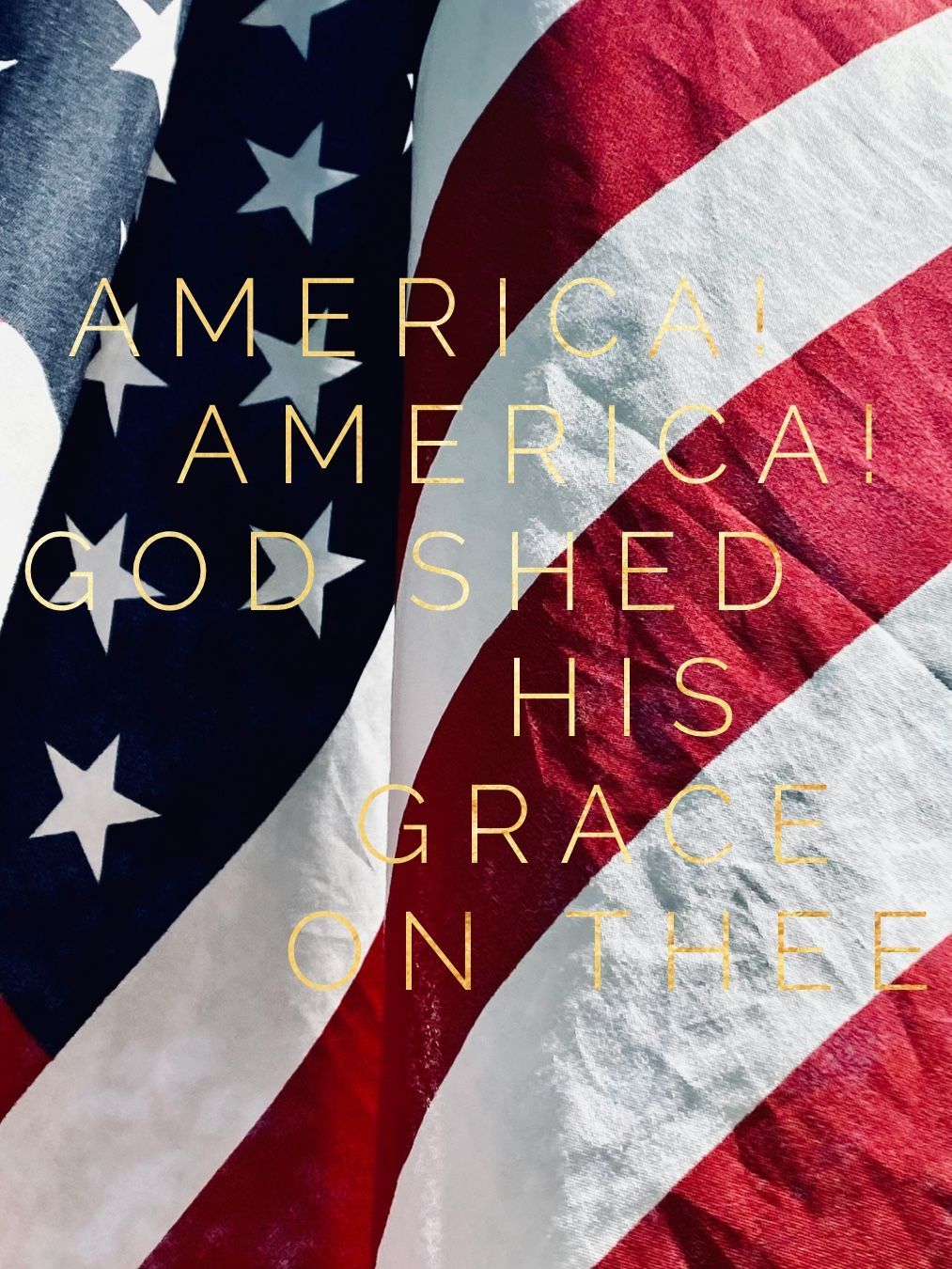
I first set foot on American soil in 1997. I was a teenager, visiting family friends in an affluent town outside of Boston. It was around this time of year, because I remember the incredible 4th of July Fireworks that seemed to go on for ever, but an abiding memory was an enormous American Flag hanging from a colossal arch by the waterfront in the city. It turns out Old Glory was everywhere - from bunting in the suburbs to sentinels on the hilltops. America was confident, inquisitive, and positive.
I’m glad I witnessed this America, because when I next visited the dust still clung to the nostrils in lower Manhattan. It was just a few months after 911, and New Yorkers were trying to rebuild lives that had been torn apart. Even here in Connecticut, the parking lots of the Metro North bore witness to the biggest challenge to our Union since Pearl Harbor. Everyone was affected. This America was different: still confident, but wounded, and more cynical than it was before.
In the quarter-century following, the world has changed yet again - and we are on the cusp of a new Technological Revolution that will inevitably alter how we live, work, and play. Change is never something we can insulate ourselves from - it happens, whether we like it, or not. But what we can reflect upon this weekend is whether we have as the Psalms say a ‘goodly heritage’ allotted to us.
I believe we have. And this semiquincentennial anniversary is a time to look both backwards to history, and forward to the future. As the Lord himself teaches us - an inheritance is morally charged. Think of the Parable of the Talents, or even the Parable of the Unjust Steward. Doing nothing with our inheritance is, in fact, to squander it: the moral equivalent of cash in a checking account, or even worse - under the bed.
Our country has become what it is today because the foundations, though imperfect - nothing made by human hands could ever claim perfection - are nonetheless sufficiently strong to admit the creative influx of successive waves of people who have moved here to seek a better life. Because new generations continue to arrive and contribute, the country is constantly changing, but hardwired into the Constitution is the ability to self-correct, and to become stronger in the process.
The idea of a country formed on the story of immigration has deep Biblical roots. God first speaks to humanity in a part of the world where human beings consider a people and a nation to be two separate things. They may be intrinsically related, but they are not the same. Of the two, it is clear from Scripture that God’s priority is to the former, but without denigrating the latter. This is because God knows the human heart - that nation more often comes before people when our allegiance is tested.
Let’s remind ourselves that God personally called Abram the Chaldean to migrate from Ur (in what is now Iraq) to the land of Canaan, where he would become the father of a great nation, but God does not want to stop there. He wants more. The covenant is expanded to become a multitude of nations, and God changes his name to Abraham to reflect that fact. At last, God reveals that Abraham will himself be a blessing to all the families of the earth. Thus Providence is revealed as a pathway to perfection stretching beyond the boundaries of nation, indeed beyond the boundaries of time and space, into eternity.
The Pilgrim Fathers considered their migration to the New World was similarly providential. They were English, but because they were radical Protestants, they were persecuted in their homeland. Through their deep trust in the Lord’s goodness, they took a risk, believing that God would make of them a blessing, just as he did Abraham and his descendants.
But there are key points of divergence in the story. Abraham was one man, and his having descendants at all was a miracle in itself. The story of this nation is one of cumulative enrichment, over centuries, by people from every corner of the world, and every walk of life. It is an ongoing story. Consider for a moment the striking paradox that the ancestors of most people who celebrate Independence Day today were still at home in Europe when those momentous events took place in 1776. But we are the rightful inheritors of that story, and we stand, as Edmund Burke might say, between those who are dead, and those who are to be born, with solemn obligations to both.
As Catholic Christians we should be at peace with the idea of being good Americans, and good Catholics. You see, one relates to time and space, and the other to eternity as well - and this encapsulates the distinction between people and nation. As Christians we are called to be both: being the people of God in the here and now, belonging to a nation whose strength and stability allows us to prepare for ultimate citizenship of Heaven. Our nation belongs to history; the people of God already participate in eternity while still journeying through history.
By God’s Providence the Constitution provided a political order in which people of all faiths or none, through the virtues of liberty, ordered by prudence, may pass their days on this earth in peace. That peace, which is itself God’s gift, allows his Spirit to move, and enlighten us with his grace. The American adventure has therefore offered Catholics not merely freedom from persecution, but the opportunity to embrace the faith deliberately, intelligently, and courageously.
The deepest parallel between Abraham's journey and the story of immigration to America is not that we are somehow favored because of something we have done. Scripture warns repeatedly against pride. Instead, we are favored by God because we put our trust in him. Abraham trusted the promise. The Founders trusted that liberty was worth a sacrifice, and we must trust that we are in the right place, at the right time, too.
Thus I urge you, at this historic moment, to spend time to locate yourselves in the tapestry of history. One of the great temptations of our age is to allow ourselves to be defined by perpetual outrage. Every day someone tells us whom we should fear, whom we should resent, and whom we should blame. But this is to keep our eyes downcast and fixed on the ground, rather than to the hills, from whence comes our help. Anger keeps us watching, clicking, and arguing. But it rarely makes us wiser, and it never makes us holier. These are the deceits of the evil one, who wishes to keep us under his control; they are also the deceits of his henchmen who wish to exert power, because angry people are easier to manipulate.
Instead, we should embrace higher ideals: seek to live a virtuous life, be inquisitive, and grateful that God’s Providence has delivered us to the beginning of this new day - as he does all the days of our lives, until he calls us to himself. The question is not whether our age is more difficult than our forebears. It is whether we shall prove as faithful with what has been entrusted to us, and whether we will pass anything meaningful on to the generations that follow us.
Recent Posts